12 Nov 2026
Anticipation building...
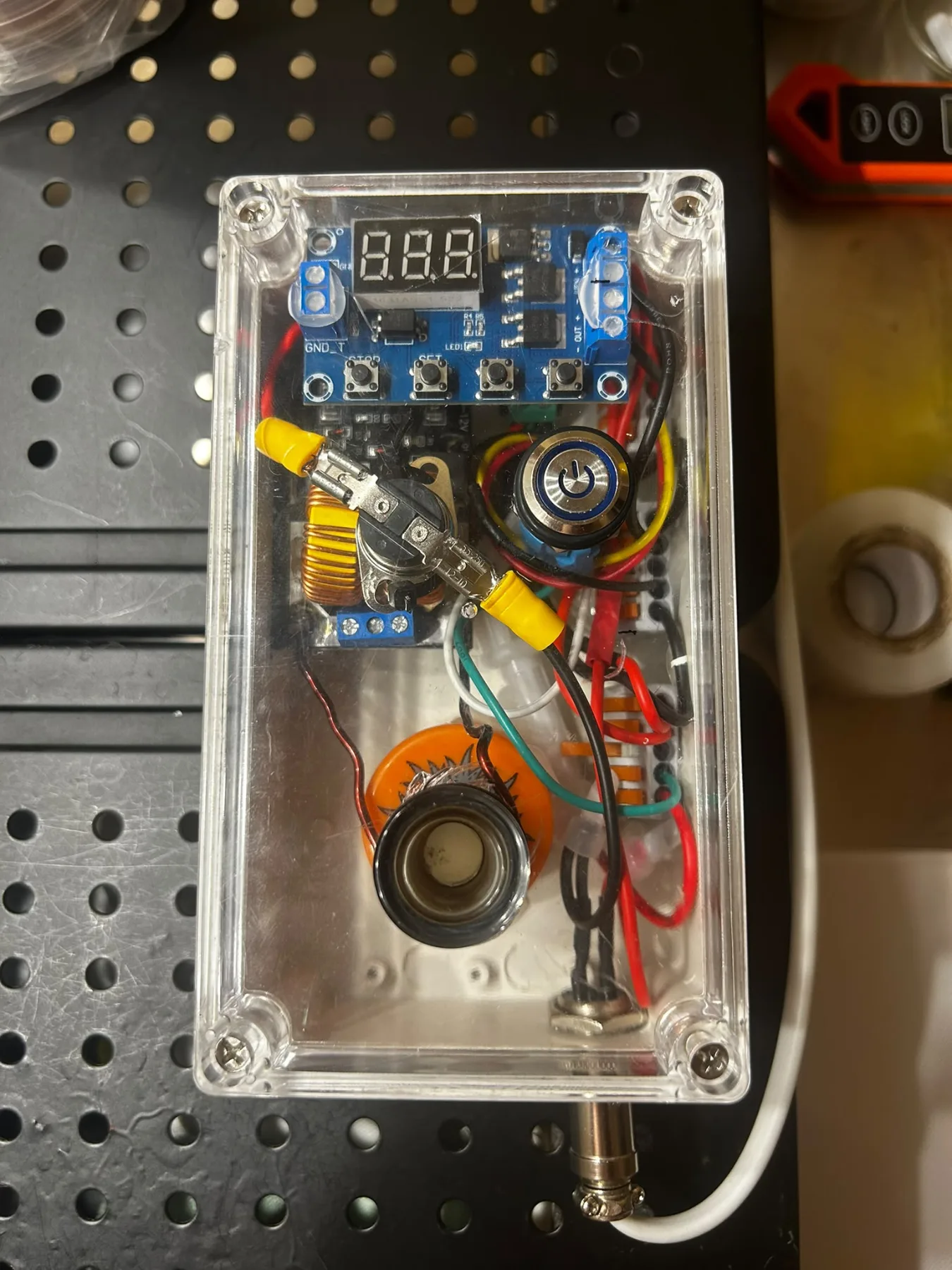
Living on an island means shipping is slow, and the koji kit is still on its way. So I filled the wait the way I like best: with a DIY project. This is an induction sterilizer. An induction coil heats a scalpel red hot in a few seconds, sterilizing it. Mine cost about €50 and took around four hours, with some research and help from AI on the wiring. A foot pedal switches it on so my hands stay free and clean, a glass tube keeps the tool off the coil, and a thermal cut-out, an inline fuse and a 15-second timer keep it from overheating. Shop-bought ones run $150–200, and the infrared kind most labs use can cost over $500.
So why does a fermentation lab need one? It's a useful tool when working with agar plates, and agar plates let me see what's actually growing in my lab.
Watching the koji up close. If you've ever grown mushrooms from spores, you know it's a lottery: every spore is a little different genetically, so you isolate and pick the best. Koji doesn't work that way. Aspergillus Oryzae has never been seen reproducing sexually, so its spores are essentially clones. A bag of spores from one strain grows into that same strain, every time. That's how a handful of specialist makers in Japan can sell the same strains year after year. They keep their own strain collections, guard them closely, and sell some as single strains and some as blends.
So I'm not expecting to find problems in the bag, and a few stray wild spores couldn't compete with the millions I add to the rice anyway. What plates give me is a close-up view of how koji grows, colony by colony. If my starter turns out to be a blend, plates will sort it into its separate strains. And clones do mutate now and then, so one day I might even pick out a line of my own.
Counting spores. My bulk bag of koji spores is pure spores, and the instructions don't agree on how much to use per kilo of rice. Plates can settle it. I dilute a weighed pinch in sterile water, spread drops of each dilution onto plates, and count the colonies that come up. That tells me how many live spores are in each gram, so I can dose by spore count instead of guessing. Repeated every few months, it also shows whether my frozen stock is holding up.
Seeing enzymes at work. Koji is valuable for its enzymes: amylase turns starch into sugar (that's what makes amazake sweet), and protease breaks down protein. On a plate made with starch, a drop of iodine turns everything dark blue except a clear halo around any colony making amylase. A plate made with milk does the same for protease. The bigger the halo, the stronger the enzyme. It's a simple way to compare starters side by side, and to pick out a strong line if I ever try selecting my own.
Checking my cleaning. Koji spores are tiny and float around for hours. After a koji session I can leave a few open plates out to catch whatever settles from the air. For surfaces, I can wipe a sterile swab over the trays, cloths and chamber walls after cleaning and streak it onto a plate. Whatever grows tells me whether my cleanup is good enough.
Trial runs in miniature. Before changing anything on a full tray of rice, I can try it on plates first: the same starter at a few different temperatures, side by side. Plates are cheap, and a failed plate costs a lot less than a failed tray.
Keeping backups. As this post shows, I can't count on fast deliveries. A pure koji culture kept on agar is a backup I control. One day it might even let me grow my own starter instead of ordering it.
None of this starts until K-001 is underway, but when it does, the sterilizer is ready.